
From traffic stops to emergency response to mobile booking, law enforcement officers need biometric devices that are reliable, rugged, and ready to perform in real-world conditions. Portable fingerprint scanners are a critical part of modern identity verification—but not all scanners are built the same.
Selecting the right field-ready biometric device means weighing use cases, mobility needs, and certification standards that ensure interoperability and performance. Below, we break down the key considerations agencies must evaluate when choosing a portable fingerprint solution.
Match the Device to the Use Case
The first step in choosing the right scanner is understanding how and where it will be used. Different operational environments demand different hardware setups.
Mobile (All-in-One/Wirelessly Tethered):
Ideal for traffic stops, on-scene arrests, or border patrol—where speed, mobility, and ease-of-use are critical. Devices like the Evolution Rapid ID offer quick fingerprint capture and can return results in seconds from local, state, or FBI RISC databases.


Tablet-Based:
Suited for field offices, temporary checkpoints, or interagency deployments. These devices provide a balance between mobility and screen size, enabling detailed capture while still being portable.
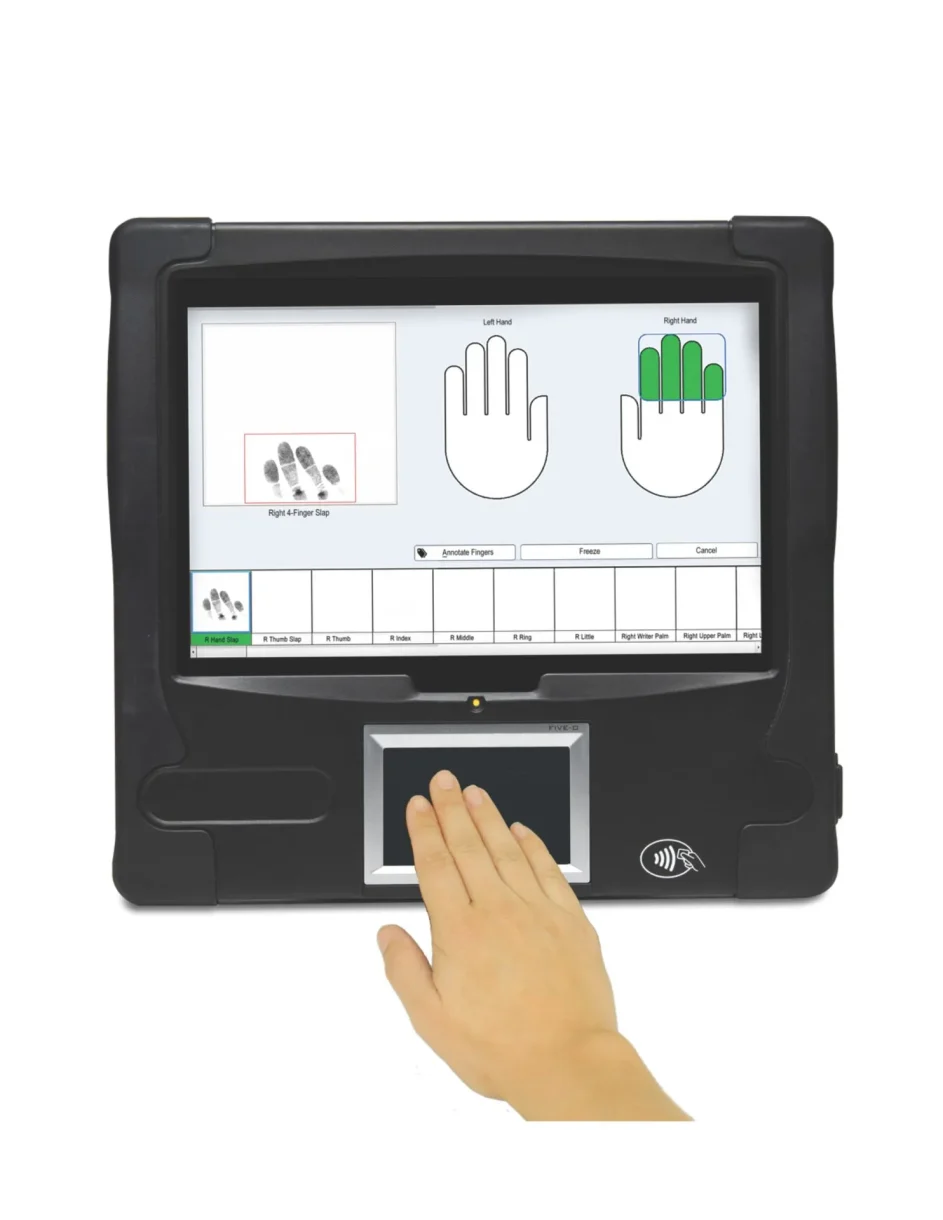
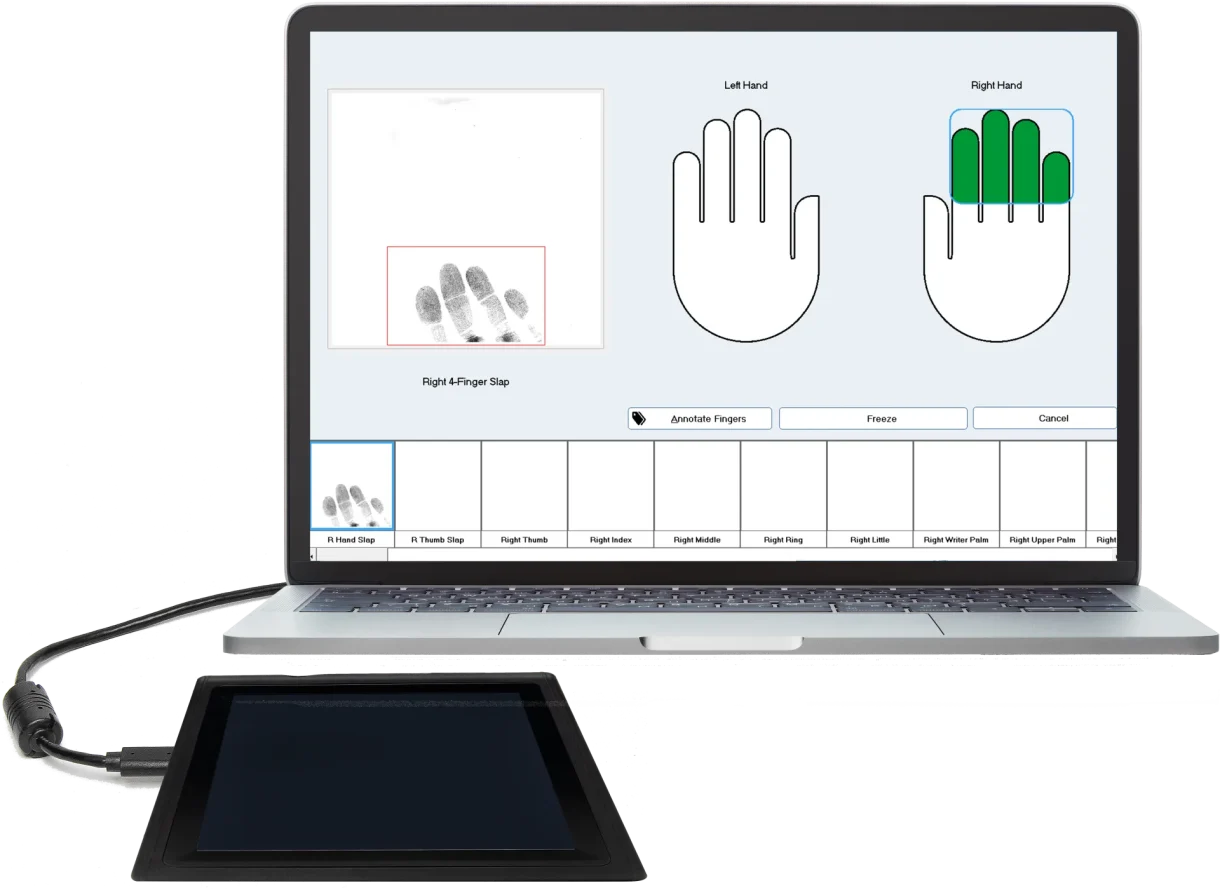
Tethered (Laptop + Peripheral Scanner):
Best for field offices, mass casualty events, or mobile command centers, where multiple biometric enrollments or more detailed captures are needed. These setups often support larger sensors and full-feature capture for comprehensive identity collection.
Understand FAP Certification Requirements
Fingerprint scanners must meet FBI Image Quality Specifications (IQS) under the FAP (Fingerprint Acquisition Profile) system to ensure quality and compatibility with state and federal systems.
Here’s a breakdown of common FAP types and what they support:
FAP-30
- Capture Type: Single fingers only
- Use Case: Rapid identification, low-resource environments
- Ideal For: Patrol cars, mobile ID checks
FAP-45
- Capture Type: Two-finger slap or single-finger roll
- Use Case: More detail for mid-level identification
- Ideal For: Field processing, portable enrollment
FAP-50
- Capture Type: Four-finger slap or single-finger roll
- Use Case: Enhanced verification and record-level capture
- Ideal For: Booking in mobile units or mobile command sites
FAP-60
- Capture Type: Four-finger slap, rolled fingers, and full palm prints (upper, lower, writer’s palm)
- Use Case: Full enrollment or latent print matching
- Ideal For: High-volume, high-accuracy environments
Choosing the right FAP level ensures your device can deliver images that meet federal and state matching requirements—and that you aren’t over- or under-equipped for your mission.
DataWorks Plus: Trusted Biometric Innovation in the Field
With over 25 years of experience developing law enforcement technology, DataWorks Plus provides field-ready biometric tools that meet the real-world needs of officers and agencies. Our solutions range from Rapid ID devices to full enrollment units, ensuring you get the right tool for every job.
Whether you’re equipping patrol units, setting up a mobile command post, or preparing for emergency response, our team is here to help you choose a device that’s rugged, accurate, and built for justice.
Why It Matters
In the field, there’s no room for guesswork. The right fingerprint scanner supports:
- Faster identity verification
- More accurate matches
- Interoperability with national databases
- Confidence during critical operations
As agencies continue to expand biometric capabilities outside the walls of correctional facilities and into the field, DataWorks Plus remains a trusted partner, delivering the technology and expertise needed to raise the standard of service, security, and performance.
